A Revolutionary Shift: When Fasteners Meet Surface Mount Technology
In the realm of printed circuit board (PCB) assembly, electronics manufacturers have long faced a dilemma: tolerate the inefficiencies of loose hardware or risk damaging component-laden boards with through-hole fasteners.
A technical white paper, Surface Mount Technology (SMT) Fasteners [translated title], authored by PennEngineering Engineer Brian G. Bentrim, presents a groundbreaking solution. By applying Surface Mount Technology to fastener assembly, this innovation is fundamentally changing the process logic of PCB manufacturing.
The Technical Principle: Making Fasteners "Disguise" as Electronic Components
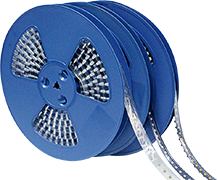
The core idea of this technology is remarkably clever: fasteners are packaged in carrier tape and reel, presented to the production line just like any other electronic component, and installed using existing surface mount equipment.
How It Works: SMT fasteners are adhered directly to solder pads on the PCB surface, undergoing the exact same reflow soldering process as other components on the board. Solder paste is applied at room temperature, heated to reflow, and forms a permanent mechanical and electrical connection upon cooling. Once solidified, the solder joint provides the necessary mechanical strength to resist pull-out forces and torque.
The elegance of this method lies in its utilization of existing PCB industry equipment and infrastructure, requiring no additional capital investment while completely eliminating the need for manual component handling.
Pain Point Comparison: Loose Hardware vs. Through-Hole Fasteners
Bentrim's paper meticulously details the shortcomings of traditional methods:
Loose Hardware: Often taking the form of plastic or metal posts, these must be placed in a secondary operation, frequently requiring manual handling and consuming significant time. The assembly process demands careful alignment of components on both sides of the PCB, and any dropped hardware must be meticulously identified and removed to prevent shorts and product failure.
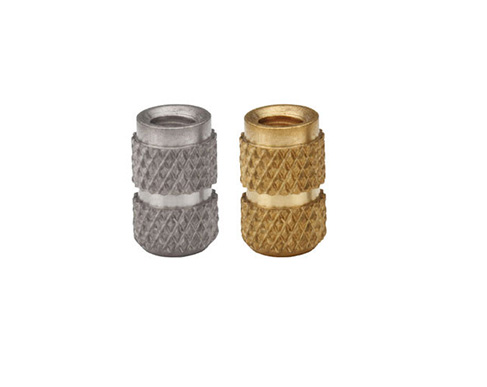
Through-Hole Fasteners: While they provide permanent attachment, they achieve this by pressing a knurled portion into a slightly smaller hole. This process inherently risks compromising board integrity. Micro-cracks can sever circuits on any layer of a multi-layer board, and misalignment during installation can lead to extensive board cracking. Components around the installation site must be kept at a sufficient distance, limiting PCB layout density.
Cost Analysis: The Numbers Driving Change
The most compelling aspect of the paper is its detailed cost comparison:
Traditional Through-Hole Scenario: Installing four through-hole fasteners on a circuit board takes 80 seconds (20 seconds each). At a labor rate of $30 per hour, the installation cost is approximately $0.78. Adding the cost of four fasteners (assuming $0.05 each) brings the total to $0.98 per board.
Quality Costs: Assuming a 0.1% failure rate related to fasteners, and a fully populated board valued at $100, the quality cost adds $0.10 per board. Common failures include micro-cracks severing circuits, installation misalignment causing board cracks, problems during subsequent assembly, and hardware mixing.
Total Cost of Ownership: Adding installation and quality costs yields a total of $1.08 per board for four fasteners.
Surface Mount Scenario: Fasteners are installed automatically by pick-and-place robots, eliminating quality issues associated with cracking or misalignment. The process exerts no impact shock on the board, preventing fractures. Parts packaged on tape and reel present extremely low risk of mixing with other hardware. A single fastener can be installed in 1/3 of a second, whereas a secondary operation can take 30 seconds.
Performance Validation: The Critical Impact of Solder Selection
Cost is only part of the feasibility equation; part functionality is paramount. The paper provides, for the first time, a systematic assessment of how solder type affects fastener adhesion:
Test Conditions: PennEngineering tested both lead-based and lead-free solder pastes on 30 workpieces. Testing utilized parts with a locating pilot that fits into a non-plated through-hole, with the part shoulder resting against the board pad to form the solder fillet.
Lead-Based Parameters: Peak temperature 258°C, using Amtech NC559v2 63/37 solder paste.
Lead-Free Parameters: Peak temperature 270°C, using Amtech NC559LF Sn96.5/3.0Ag/0.5Cu (SAC305) solder paste.
Key Finding: Test results showed significant differences, with lead-based solder providing better adhesion than lead-free alternatives. Factors such as part profile, specific solder alloy, solder volume, and board surface finish all influence performance. The paper recommends that for critical applications, users obtain samples from suppliers and conduct testing under conditions simulating their actual production environment.
Product Types and Applications
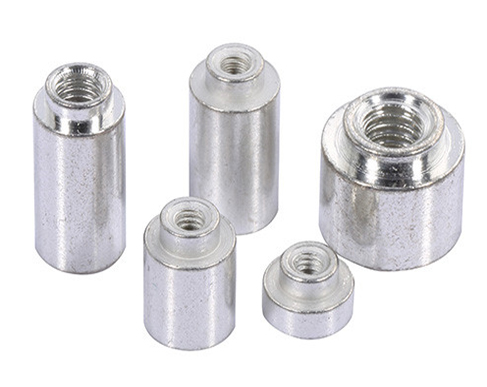
Several types of SMT fasteners are currently available as standard options:
Product Type Application Scenarios
Panel Fasteners Applications where circuit boards need easy removal and re-installation
Spacers Board-to-board stacking, compensating for distance between boards
Nuts A more convenient fastening method compared to broaching or loose hardware
Right-Angle Fasteners Connecting components oriented 90° apart
In server applications, these fasteners can be used for mounting daughter cards to motherboards, attaching heat sinks to PCBs, securing fans and sensors, spacing boards from chassis, and providing grounding points.
Process Considerations: From Design to Production
The paper also delves into several process factors crucial for successful implementation:
Pick-and-Place Adaptability: Not all fasteners have a convenient, exposed flat surface for vacuum pickup tips. Threaded or through-hole style spacers and nuts are most prone to this issue. A solution involves using a patch adhered to the top of the part, which must be capable of surviving the oven's thermal profile.
Stencil Design: SMT fasteners often have a pilot hole to aid stability and placement. The pilot sitting in this hole requires the stencil to mask the hole while exposing the pad to solder. A common design uses "spokes" covering the PCB's pilot hole to prevent solder paste from wicking into the non-plated through-hole.
Tin Whisker Mitigation: Pure tin is most commonly used for plating SMT fasteners. In applications concerned about tin whiskers, it's critical to ensure the tin plating on the fastener is matte finish and has been subjected to a post-plating bake anneal to stress-relieve the deposit, which inhibits whisker growth.
Industry Significance and Future Outlook
The value of this technology extends beyond cost savings; it opens new possibilities for PCB design. Lead-free standoffs can be placed directly on top of copper traces without needing to route around through-holes as required by traditional methods, enabling denser packing of electrical components.
As electronic products continue trending towards miniaturization and higher density, SMT fastener technology is becoming an indispensable part of the electronics manufacturing process. It exemplifies a key principle in engineering: the best solutions often don't involve inventing entirely new processes, but creatively leveraging existing infrastructure to solve new problems.
For electronics manufacturers facing cost pressures and process optimization needs, the technology outlined by PennEngineering offers a proven, viable path forward. As the paper's author aptly states: "Any secondary operation that can be eliminated is a cost savings, and operations involving fasteners can be among the most costly to implement."
Interpretation based on the technical literature "Surface Mount Technology (SMT) Fasteners" by PennEngineering engineer Brian G. Bentrim and related technical resources on the PEM website.

 Recommended News